Skip to content

Soil laboratory testing is where a scoop of Central Florida ground stops being dirt and starts becoming data your engineer can design around. A sample pulled from a boring in Marion, Lake, or Sumter County looks unremarkable in a jar. The lab is where it finally tells you what it can carry, how it drains, and how it will behave under a building.
For most people the lab is a black box. Field crews collect samples, they disappear into an accredited facility, and weeks later a report arrives full of grain-size curves and classification symbols. This post opens that box. You will see what happens to your sample after it leaves the field, which core tests matter, and why the accreditation behind those numbers protects your project.
Soil laboratory testing is the step that turns a field boring into numbers an engineer can actually design a foundation around.
What Soil Laboratory Testing Does After the Sample Leaves the Field
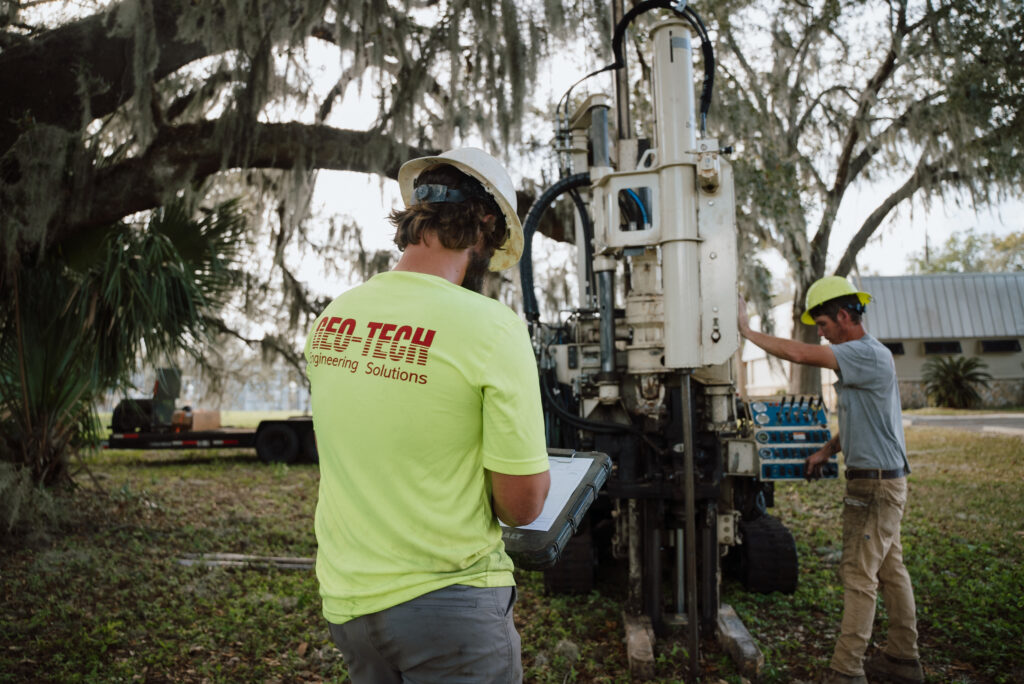
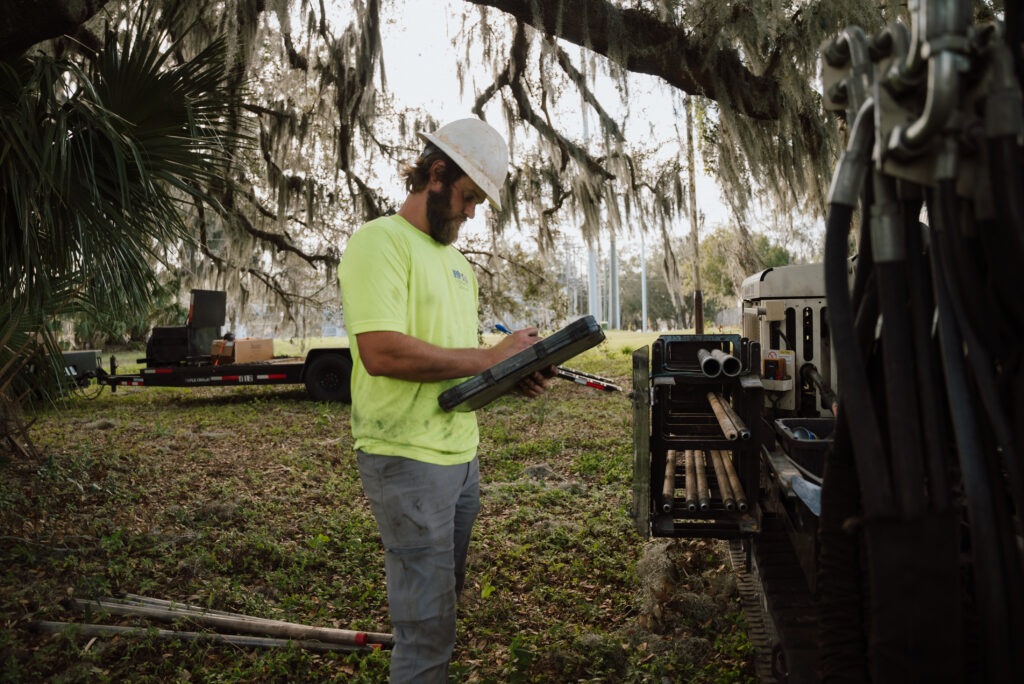
Every sample starts in the field. Our seven track-mounted direct-push rigs collect it through SPT, CPT, and auger borings, and the field team logs depth, color, and moisture on site. That log matters, but it is only a first impression. The real characterization happens indoors under controlled conditions.
In the lab, technicians preserve moisture, weigh samples, and route each one to a defined series of tests. Nothing is guessed. Standardized methods, mostly published by ASTM International, govern how each sample is dried, sieved, and measured so results from one boring can be compared to another. That repeatability is the whole point of accredited laboratory testing.

The Core Tests: Sieve Analysis, Atterberg Limits, and Moisture
Sieve or gradation analysis is usually first. The soil is washed and shaken through a stack of progressively finer screens, and the weight caught on each one builds a grain-size curve. That curve tells you whether you have clean Florida sand, silt, clay, or a mix, which drives drainage and bearing behavior.
Atterberg limits measure how a fine-grained soil behaves as its water content changes, marking the shift from solid to plastic to liquid. Paired with a moisture content test, which simply weighs a sample wet and again after oven drying, these numbers reveal shrink-swell potential and how sensitive the ground is to our high groundwater.
Proctor, Organics, and What Soil Laboratory Testing Reveals for Design
Proctor compaction testing finds the moisture level at which a soil packs to its maximum density. Field crews then use that target to verify fill during construction materials testing, so structural fill is placed correctly instead of by guesswork. This is the bridge between the lab bench and the compactor on your site.
Organic content matters here in Florida, where buried peat and muck are common. A loss-on-ignition test burns off organics to measure how much is present, because organic soils compress for years and rarely support foundations well. Together, these results from soil laboratory testing tell your engineer what to remove, what to improve, and what to build on.
Soil Classification and Why Accredited Soil Laboratory Testing Matters
Classification ties the tests together. Using systems like the Unified Soil Classification System (USCS) and the AASHTO system, gradation and Atterberg results assign each layer a standard label. That shared language lets any reviewing engineer or agency read your report the same way, whether the project is a warehouse or a roadway.
Accreditation is what makes those labels trustworthy. Our materials laboratory is certified by CMEC and qualified under FDOT, which means our equipment, procedures, and technicians are audited against national standards. On public and threshold projects, that certification is often required, not optional, and it stands behind every number we report.
How Lab Data Connects Field Borings to Real Recommendations
A boring log shows where soil layers change. Soil laboratory testing shows what each of those layers actually is. Combine them and your geotechnical engineer can calculate allowable bearing pressure, estimate settlement, and choose between a shallow footing, a deeper system, or ground improvement.
That is the payoff. The recommendations in a geotechnical engineering report are not opinions. They trace directly back to measured lab values, so the design responds to your real ground instead of an assumption about it.
01
Intake and Logging
Samples arrive sealed from the field, get weighed, and are logged against their exact boring and depth so nothing is mixed up.
02
Index Testing
Technicians run sieve analysis, Atterberg limits, and moisture content to define what each soil is and how it holds water.
03
Performance Testing
Proctor compaction and organic content tests establish how the soil packs and whether it can carry load over time.
04
Classification and Reporting
Results are classified under USCS and AASHTO, then delivered to your engineer as the basis for design recommendations.
Soil laboratory testing supports a wide range of Florida projects and decisions. If your work touches any of the items below, lab data belongs in your planning.
- New commercial or residential foundations
- Roadway and pavement subgrade design
- Structural fill placement and verification
- Stormwater and retention pond design
- Suspected organic or muck soils on site
- Sinkhole and karst limestone evaluations
- Public agency and FDOT-governed work
- Threshold and construction inspection
- Property due diligence before purchase
- Sites with high groundwater or sandy soils