Skip to content

Foundation settlement is the downward movement of a structure as the soil beneath it compresses, shifts, or loses support. In Central Florida, that ground is rarely as predictable as it looks at the surface. Sandy fill, buried organics, and karst limestone all sit close together, so two corners of the same slab can rest on very different material.
The good news is that most movement has a knowable cause. When you understand what is happening under your building, you can tell the difference between minor cosmetic cracking and a real structural concern. This post explains the causes, the warning signs, and how a forensic investigation pins down the answer.
Foundation settlement is not a mystery to be feared. It is a soil condition that can be measured, diagnosed, and corrected with the right investigation.
What Foundation Settlement Actually Is
Every building presses its weight down into the ground. Some downward movement is normal as new soil consolidates under load. Uniform settlement happens when the whole structure sinks evenly, which is usually harmless and often unnoticed.
Differential settlement is the one that matters. It happens when one part of the building moves more than another, creating stress that the frame and slab were never designed to carry. That uneven movement is what cracks walls, sticks doors, and worries owners.
Common Causes of Foundation Settlement in Florida
Organic and compressible soils are a leading cause. Buried peat, muck, and old root zones squeeze slowly under load, and Central Florida has plenty of them near wetlands, ponds, and former groundcover.
Poor compaction is another. When fill is placed too fast or too wet, it keeps consolidating for years after the building goes up. The result is a slab that was never resting on the firm base the plans assumed.
Groundwater changes add a third driver. Central Florida sits on a high, shifting water table, and heavy pumping, drought, or new drainage can lower it enough to let loose soils compress. Fourth is sinkhole raveling, where limestone dissolves and soil ravels into voids below. Together these four forces explain most foundation settlement across Marion, Lake, and Sumter counties. The U.S. Geological Survey documents how widespread these karst conditions are across the state.
Warning Signs You Should Not Ignore
The earliest clues are cosmetic and easy to dismiss. Look for stair-step cracks in block or stucco, diagonal cracks running from window and door corners, and gaps opening where walls meet ceilings.
Other signs show up in daily use. Doors and windows that suddenly stick, floors that slope or feel bouncy, and separation between the slab and exterior features all point toward movement. One sign alone may mean little, but a pattern of them together deserves a professional look.
Timing matters too. Cracks that appear soon after construction often trace back to fill and compaction, while cracks that show up years later can signal groundwater changes or raveling. Tracking when and how fast the signs of foundation settlement progress helps an engineer read the underlying cause.
How a Forensic Investigation Diagnoses Foundation Settlement
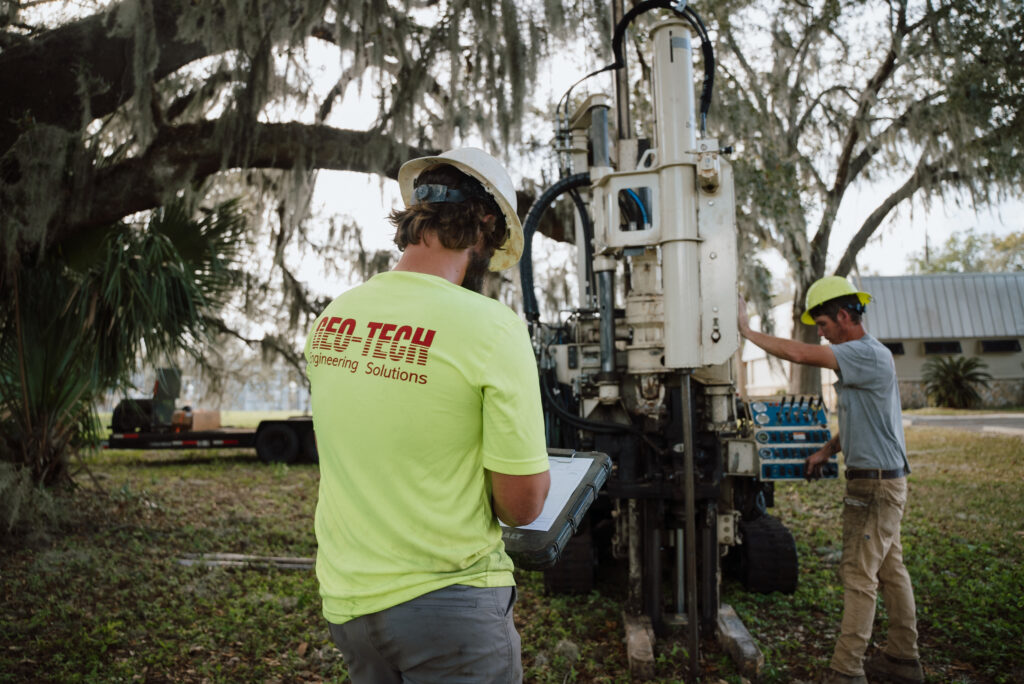
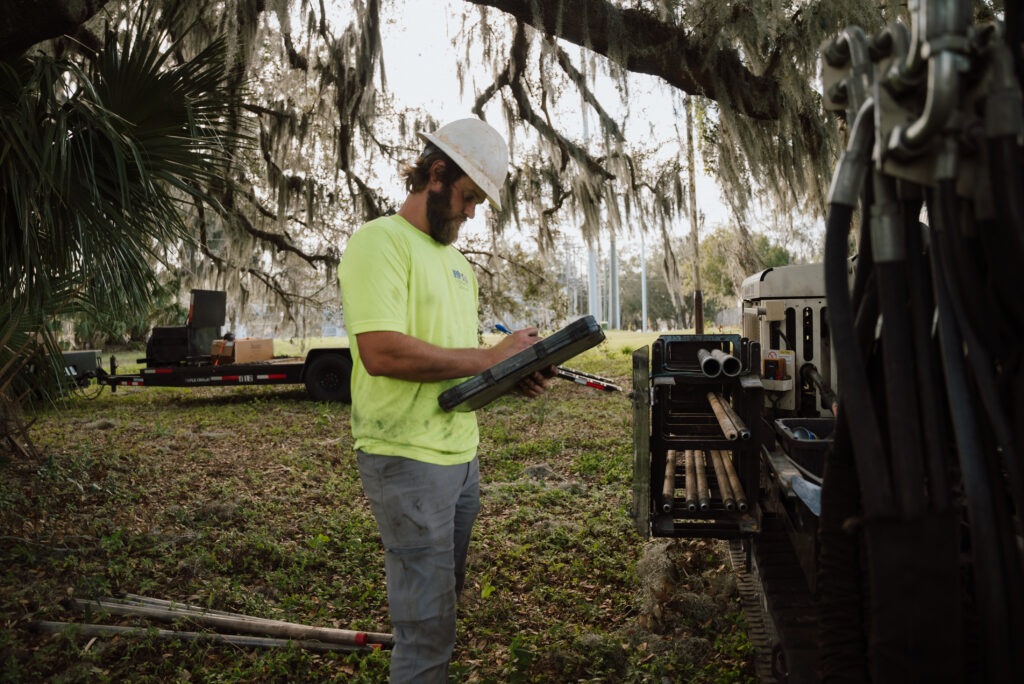
A forensic investigation starts underground, not at the cracks. Our team drills borings with direct-push rigs and runs Standard Penetration Testing and Cone Penetration Testing to map the soil layers and find the weak or compressible zones. Our field drilling services reach the depths where the real story lives.
We pair those borings with ground penetrating radar to scan for voids and raveling, and we bring recovered samples into our geotechnical engineering program for lab analysis. Together, borings, radar, and testing turn foundation settlement from guesswork into a measured diagnosis.
Separating Settlement From Sinkhole Activity
In Florida, the first question owners ask is whether they have a sinkhole. Ordinary foundation settlement and active sinkhole raveling can produce similar cracks, but they call for very different responses, so the distinction matters.
This is where subsurface imaging earns its keep. Our geophysical exploration uses more than twenty years of ground penetrating radar experience in Central Florida to look for the raveled soil and voids that signal karst activity. When the radar shows uniform, competent soil under a settling corner, we can often rule out a sinkhole and focus on the true cause.
What Remediation Looks Like After Diagnosis
Once the cause is clear, the repair follows the findings rather than a guess. Compressible soils may call for underpinning or helical piers that transfer load to firmer material below. Voids and raveling may need pressure grouting to fill and stabilize the ground.
The right fix depends entirely on the diagnosis, which is why the investigation comes first. Treating foundation settlement without knowing the cause wastes money and can leave the real problem in place. With a measured picture of the soil, you can repair once, correctly, and move on with confidence.
The four steps below show how a typical investigation moves from concern to a defensible plan.
01
Site Review
We document the cracks, survey elevations, and study the building history to frame the problem.
02
Subsurface Testing
We drill borings and run SPT and CPT to profile the soil and locate weak or compressible layers.
03
Geophysical Scanning
We run ground penetrating radar to check for voids, raveling, and possible sinkhole activity.
04
Analysis and Recommendations
Our lab tests the samples and our engineers deliver a clear cause and a repair path.
A forensic study answers more than one question. Here is what a full investigation typically covers and the conditions that most often trigger one.
- Cause of movement under a slab or footing
- Depth and thickness of compressible soils
- Presence of voids or active raveling
- Groundwater levels and their influence
- Suitability of the site for planned repairs
- New stair-step or diagonal wall cracks
- Doors and windows that stick or bind
- Sloping, uneven, or bouncy floors
- Separation at slab edges or additions
- An insurance or real estate dispute