Skip to content

A soil boring is the most honest look you can get at your property before anything gets built on it. It is a vertical hole, drilled carefully into the ground, that lets our team pull up the actual material your foundation or roadway will one day rest on. In Central Florida, where the surface can look perfectly buildable while trouble hides twenty feet down, that look matters more than most owners expect.
Whether you are a builder pricing a project, a property buyer doing due diligence, or an engineer sizing footings, a soil boring turns guesswork into evidence. It shows you the soil layers, the water, and the strength of the ground, so the decisions that follow are grounded in fact rather than hope.
A soil boring is the difference between designing for the ground you actually have and gambling on the ground you assume is there.
What a Soil Boring Actually Is
A soil boring is a drilled sample of the earth, taken at set depth intervals so we can log exactly what changes as we go down. Each interval is recorded, described, and often sent to the lab for testing. The result is a boring log: a written cross-section of your site that reads from the surface to well below where your loads will reach.
Not all ground is created equal, and no two borings on the same parcel are guaranteed to match. That is why depth, spacing, and method are chosen to fit your structure and the local geology, from sandy uplands to the karst limestone that shapes so much of Marion, Lake, and Sumter counties.
SPT, CPT, and Auger Borings Are Not the Same Test
People say “boring” as if it is one thing, but the method changes what you learn. A Standard Penetration Test (SPT) drives a split-spoon sampler into the soil with a hammer and counts the blows needed to advance it. That blow count, the N-value, tells us how dense or firm each layer is, and it brings up a physical sample you can see and test.
A Cone Penetration Test (CPT) pushes an instrumented cone steadily into the ground and reads resistance continuously, giving a highly detailed profile without a hammer. Auger borings, by contrast, turn soil up the flights and are ideal for shallow work and quick stratigraphy. Each has a place, and choosing well is part of good geotechnical drilling services.
What an Undisturbed Sample From a Soil Boring Reveals
The value of a soil boring is in what the sample tells you once it reaches the surface. Soil layering shows where sand gives way to clay, silt, or buried organics that behave very differently under load. Density and the SPT N-value show whether a layer will carry weight or settle. Groundwater depth, read in the borehole, tells you what you are building into, which matters everywhere in high-water-table Florida.
Organics deserve special attention here. A seam of peat or muck can look minor on a log and still cause years of settlement. From these findings we estimate bearing capacity, the safe load your soil can support, which then feeds directly into design. Confirming those numbers in a materials testing laboratory is how a field observation becomes a design value you can trust.
Why Your Soil Boring Drives Foundation and Roadway Decisions
Once the data is in, your soil boring shapes nearly every structural choice that follows. Shallow spread footings, thickened slabs, deep piles, or ground improvement are not preferences, they are responses to what the borings found. Skip that step and you are sizing a foundation for soil you have never actually seen.
Roadways answer to the same logic. Subgrade strength, groundwater, and soft or organic zones decide pavement thickness and drainage long before a paver arrives. Public projects follow strict standards, and the Florida Department of Transportation sets the exploration and testing requirements that many Central Florida jobs must meet. Sound geotechnical engineering ties the borings, the lab, and the design together into one defensible recommendation.
01
Site Review and Layout
We review your plans, the local geology, and access, then lay out boring locations and depths matched to your structure.
02
Field Drilling and Sampling
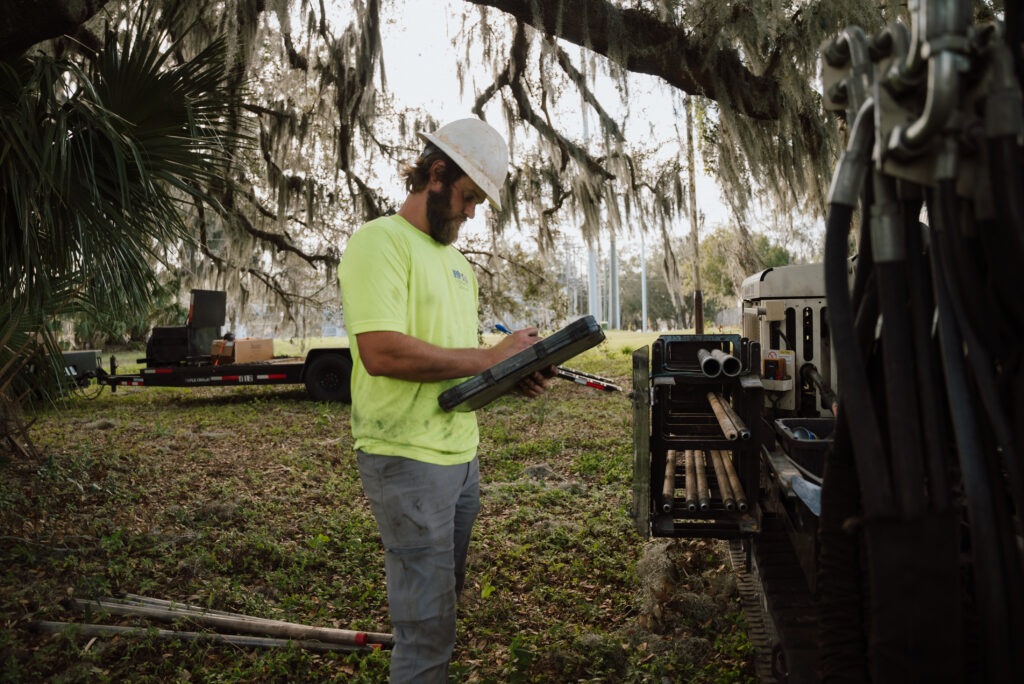
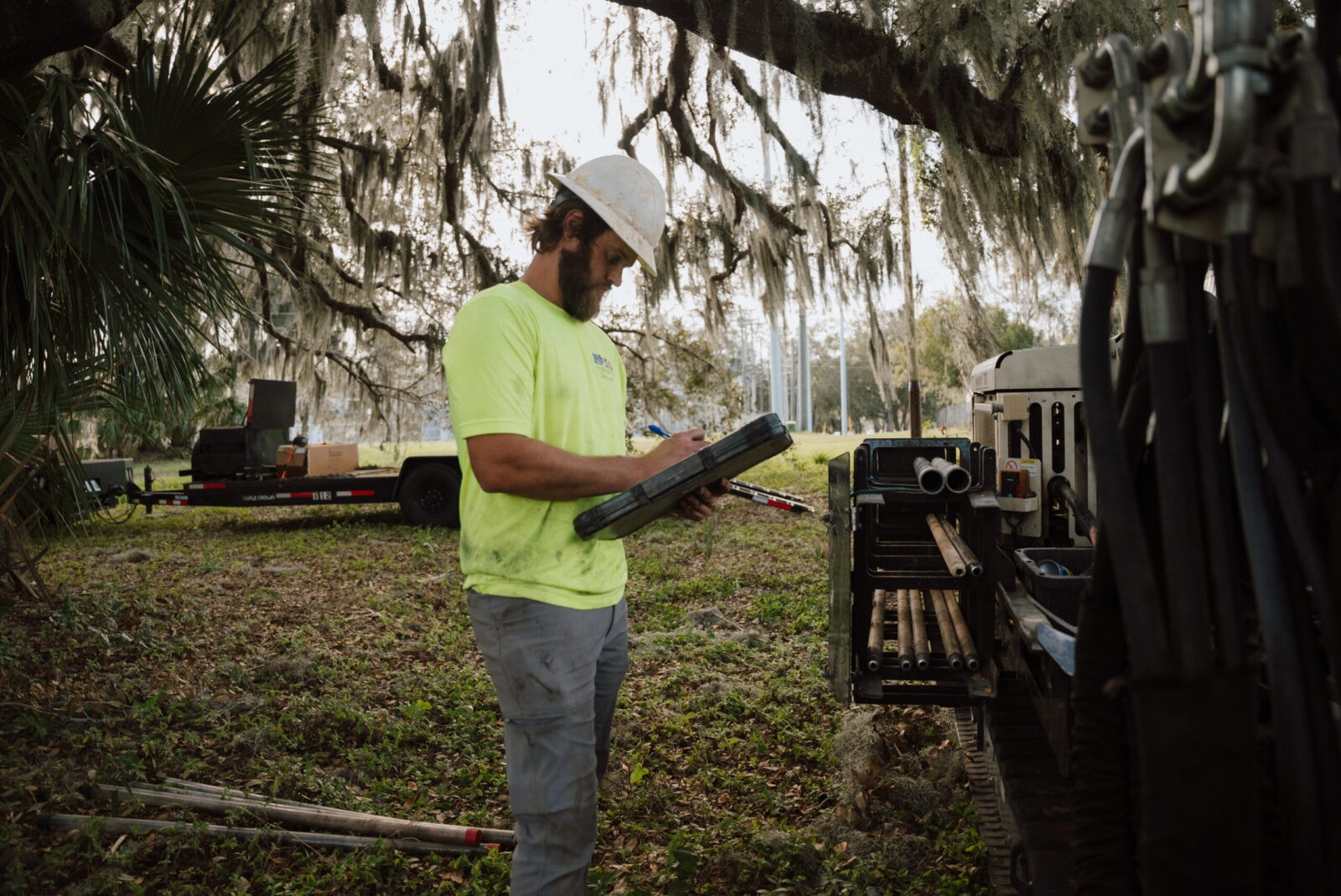
Our crews drill each boring, log the soil in real time, record groundwater, and recover samples for the lab.
03
Laboratory Testing
Recovered samples are tested for classification, moisture, density, and strength in our accredited lab.
04
Engineering Report
We combine field and lab data into clear foundation and site recommendations you and your designer can build from.
Seven Track-Mounted Rigs, One Clear Picture
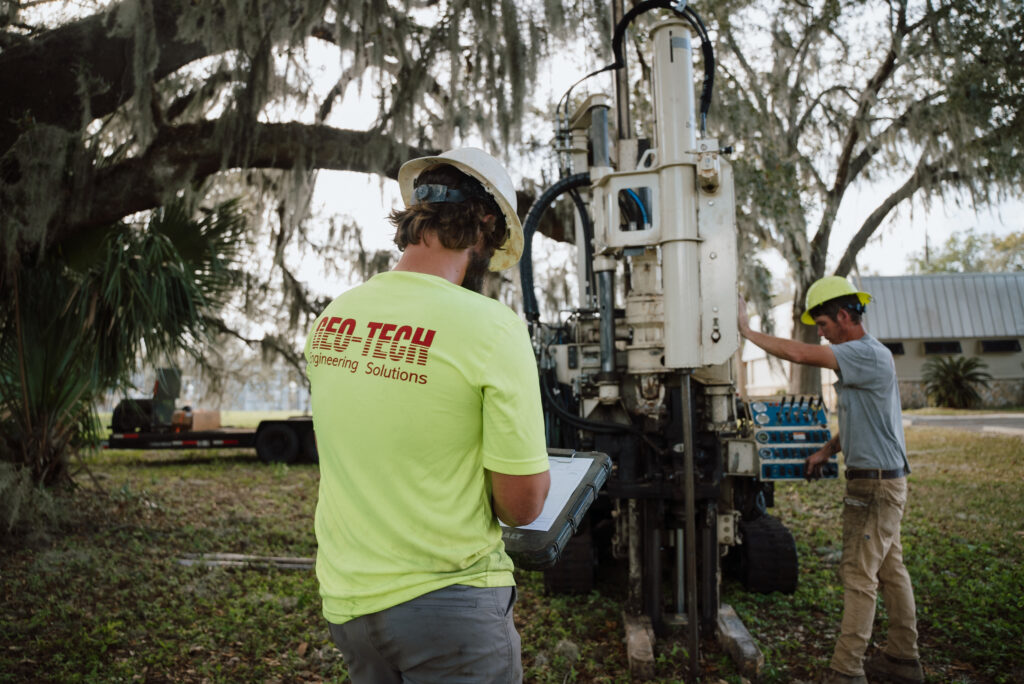
Field conditions in Central Florida are rarely convenient. Soft ground, standing water, tight lots, and Spanish-moss backwoods sites all get in the way of a truck. Our seven track-mounted direct-push drill rigs reach places wheels cannot, which means a soil boring can happen where and when your schedule needs it.
That reach pairs with more than twenty years of local experience and a full range of methods under one roof: SPT, CPT, auger borings, and field permeability testing. A soil boring is only as useful as the crew reading it, and knowing this ground is what turns raw samples into answers you can act on.
A soil boring is worth ordering earlier than most people think, and a handful of clear triggers should prompt one on your project.
- New residential or commercial construction
- Buying land or a building for development
- Additions that add significant load
- Roadway, parking, or pavement design
- Retaining walls or deep foundations
- Sites near known karst or sinkhole activity
- Low, wet, or historically filled ground
- Suspected buried organics or old debris
- Stormwater ponds and drainage design
- Public or FDOT-regulated projects