Skip to content

Buying land in Florida starts long before you sign, and the biggest risks are usually the ones you cannot see from the surface. A parcel can look flat, dry, and ready to build while the soil twenty feet down tells a very different story. That gap between what the surface shows and what the ground actually holds is where deals go sideways.
Due diligence is your window to find out. During the inspection period, you have the right to study the property before your money is committed. Smart buyers and developers who are buying land in Florida use that window to look down, not just around, because the subsurface can change your price, your design cost, and whether the site is buildable at all.
Buying land in Florida without a subsurface evaluation means paying for a surface you can see and inheriting a ground you cannot.
Why the Ground Matters When Buying Land in Florida
Florida sits on karst limestone that slowly dissolves in groundwater over thousands of years. That process leaves cavities, soft clay seams, and raveling soil that can eventually become a sinkhole. In Marion, Lake, Sumter, and the surrounding counties, this is not rare. It is the normal condition of the ground.
Add high groundwater, loose sands, and pockets of compressible organic soil, and you have a site that behaves nothing like the photos in the listing. A geotechnical engineering evaluation reads those conditions before you own them, so the surprises show up in a report instead of in a foundation.
The Subsurface Unknowns That Change a Deal
Five things quietly move the value of raw land: sinkhole potential, compressible organic soils, high groundwater, buried debris, and poor bearing capacity. Any one of them can turn a clean site into an expensive one. Together they decide whether a project pencils out. When buying land in Florida, these are the risks worth chasing down early.
Sinkhole potential may require deeper foundations or grouting. Organic soils settle for years and can crack slabs. High groundwater complicates stormwater and below-grade work. Buried debris from a prior use must be found and removed. Weak bearing soils force costly redesign. None of these are visible when you walk the lot, which is exactly why they belong in your due diligence.
Where a Geotechnical Evaluation Fits in Due Diligence
The inspection period is the right time for this work, not after closing. Before your funds are at risk, a geotechnical evaluation tells you what the ground can support and what it will cost to build there. That knowledge gives you room to negotiate, or to walk away clean. This is the single most useful step in buying land in Florida with confidence.
Borings and testing turn guesses into facts. Field crews collect samples and readings, and an accredited materials testing laboratory certified by CMEC and FDOT analyzes them. When you are buying land in Florida, that lab work is the difference between a confident offer and a hopeful one.
How Borings and GPR Answer the Questions Before You Close
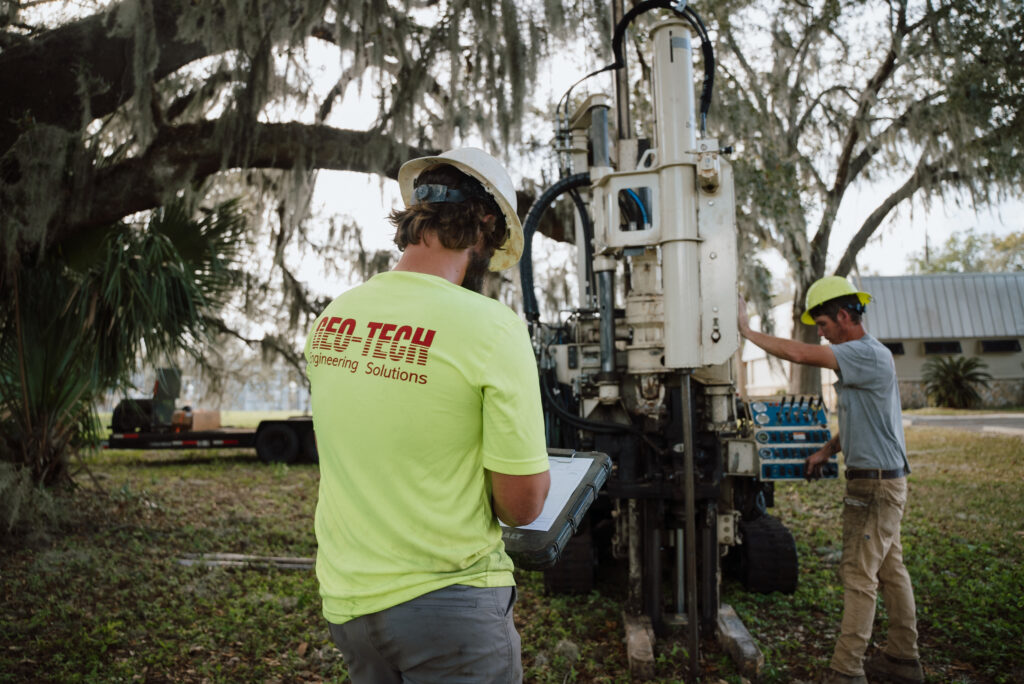
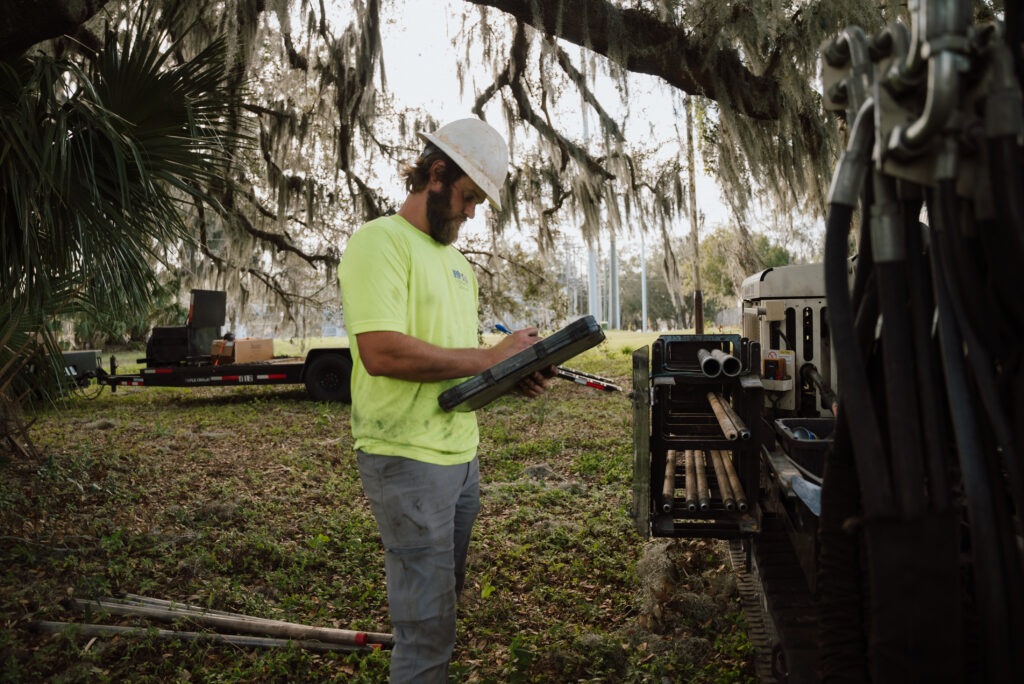
Two tools do most of the heavy lifting. Direct-push borings pull soil profiles from depth so engineers can measure strength, layering, and groundwater. Standard penetration testing, cone penetration testing, auger borings, and field permeability testing each answer a specific question about how the ground will behave under a building.
Ground penetrating radar covers the ground between the borings. With more than twenty years of geophysical exploration across Central Florida, GPR can flag voids, buried debris, and anomalies without digging. Paired with direct-push drilling services, it gives you a picture of the whole parcel, not just a few points on it.
How Findings Affect Price, Design, and Buildability When Buying Land in Florida
Subsurface findings translate directly into dollars. Weak or wet soils may demand deep foundations, soil improvement, or extra fill, and those costs belong in your offer, not in a change order after you own the site. A clean report, on the other hand, supports a stronger price and a faster path to permitting.
Findings also shape design and buildability. They tell your engineer where the building can sit, how the foundation should be built, and whether the layout needs to shift. For anyone buying land in Florida, that early clarity protects both the budget and the schedule. The state’s environmental context, from wetlands to groundwater, is documented by the Florida Department of Environmental Protection, and your geotechnical data lines up with those realities.
Your Path From Offer to Confident Close
A subsurface evaluation follows a clear sequence, and it fits inside a normal inspection period. The goal is simple: know the ground before you commit to it. That discipline is what separates confident buyers from hopeful ones when buying land in Florida.
01
Review the site
We study the parcel, its history, and the local geology to plan where and how deep to explore.
02
Explore the subsurface
Track-mounted direct-push rigs drill borings while GPR scans between them for voids and buried debris.
03
Test in the laboratory
An accredited lab measures strength, settlement potential, and groundwater behavior from the collected samples.
04
Report and advise
You receive clear findings on bearing capacity, risks, and cost drivers in time to negotiate or close.
Not every red flag means the same thing, so it helps to know what a subsurface study can surface. The following conditions and project types are common reasons to look below grade before you close.
- Suspected sinkhole or karst activity
- Soft or organic soils on the parcel
- High or seasonal groundwater
- A prior industrial or fill use
- Signs of settlement on nearby structures
- Commercial or multi-building development
- Warehouse or heavy-load structures
- Subdivisions and residential communities
- Stormwater ponds and retention areas
- Any site where you need a firm price