Skip to content

A thorough roadway soil evaluation is the difference between a pavement that lasts decades and one that cracks within a few seasons. Roads fail from the ground up, not from the surface down, and the soil beneath the asphalt decides how long that surface holds together.
In Central Florida, the ground is rarely as uniform as it looks. Sandy soils, high groundwater, buried organics, and karst limestone all sit within the same corridor, and each reacts differently under traffic loads. Testing the subgrade before you design the pavement tells you what you are actually building on.
A roadway soil evaluation turns a hidden variable into a known quantity, so your pavement section is designed for the ground it truly rests on.
Why Roads Fail From the Ground Up
Pavement carries load the way a stack of layers carries weight. The asphalt spreads traffic loads onto the base, the base spreads them onto the subgrade, and the subgrade soil absorbs what reaches the bottom. When that soil is weak, wet, or full of organics, it flexes and settles under every axle.
That movement shows up at the surface as rutting, alligator cracking, and potholes. The asphalt gets blamed, but the real cause is usually below it. This is why a roadway soil evaluation looks first at the subgrade, where the problems start.
What a Roadway Soil Evaluation Tests
A roadway soil evaluation measures the properties that control how the ground behaves under load. Each result feeds directly into a safer, longer-lasting design. Our geotechnical engineering team collects the field data, and our lab confirms it.
These are the core measurements that shape a Florida road design:
01
Subgrade Strength and Bearing
Limerock Bearing Ratio (LBR) and related tests show how much load the soil can support before it deforms.
02
Compaction and Density
Field density testing confirms the subgrade and base are compacted to the target so they do not settle later.
03
Moisture and Groundwater
Moisture content and water table depth reveal whether the soil will stay stable or soften under seasonal saturation.
04
Muck and Organics
Borings identify buried muck and organic seams that must be removed or bridged before paving.
How the Evaluation Informs Pavement Design
Every number from the field and the lab feeds the pavement section. A strong, well-drained subgrade may need less base and asphalt, which saves money without cutting service life. A weak or wet subgrade tells the engineer to add thickness, stabilize the soil, or improve drainage before the first load ever arrives.
Skipping this step forces the designer to guess. Guessing high wastes material on ground that did not need it, and guessing low builds a road that fails early. A roadway soil evaluation replaces that guess with measured data, so the section fits the site.
The Cost of Skipping the Test
Cutting the soil work to save a few days almost always costs more later. Premature rutting, cracking, and base failure lead to repairs, detours, and full-depth reconstruction long before the road should have needed it. On public projects, that means budget overruns and frustrated residents.
The soil does not care that the schedule was tight. Organic pockets keep settling, saturated subgrade keeps pumping fines, and weak bearing keeps flexing until the surface gives way. A modest investment up front protects a much larger investment in the finished roadway.
FDOT Standards and Central Florida Conditions
Public and private roads in the state are typically designed and tested against the methods published by the Florida Department of Transportation. Those procedures cover subgrade bearing, density acceptance, and material quality, and they exist because Florida ground is genuinely challenging.
Local conditions raise the stakes. High groundwater sits close to the surface across Marion, Lake, and Sumter counties, sandy soils drain unpredictably, and karst limestone can hide voids beneath a firm-looking parcel. A roadway soil evaluation built for these conditions catches those issues before they reach the pavement.
How Geo-Tech Performs a Roadway Soil Evaluation
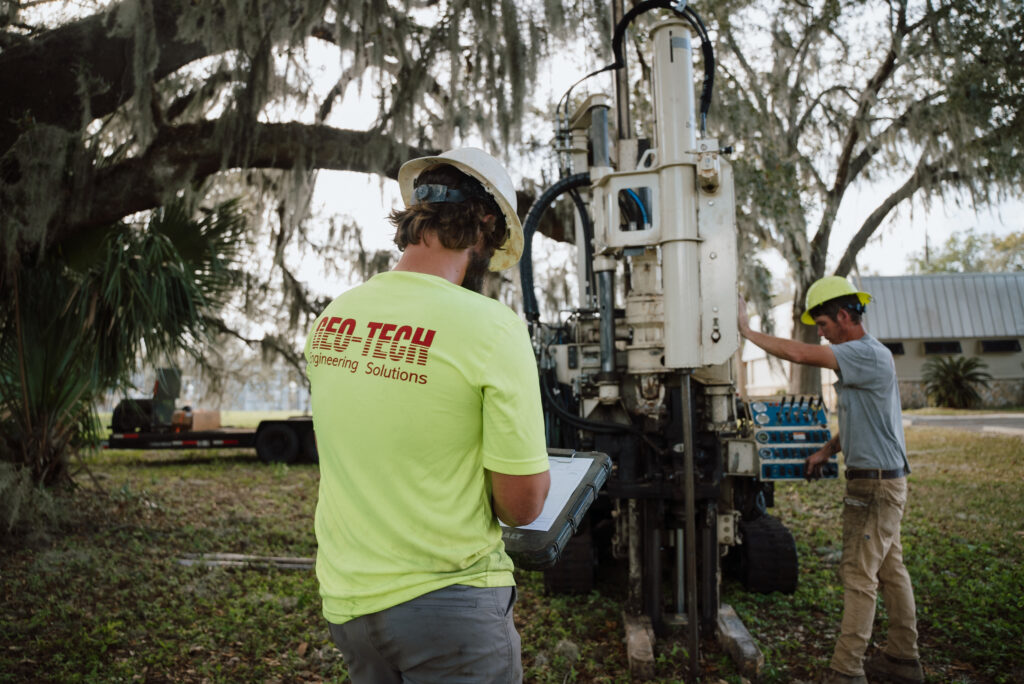
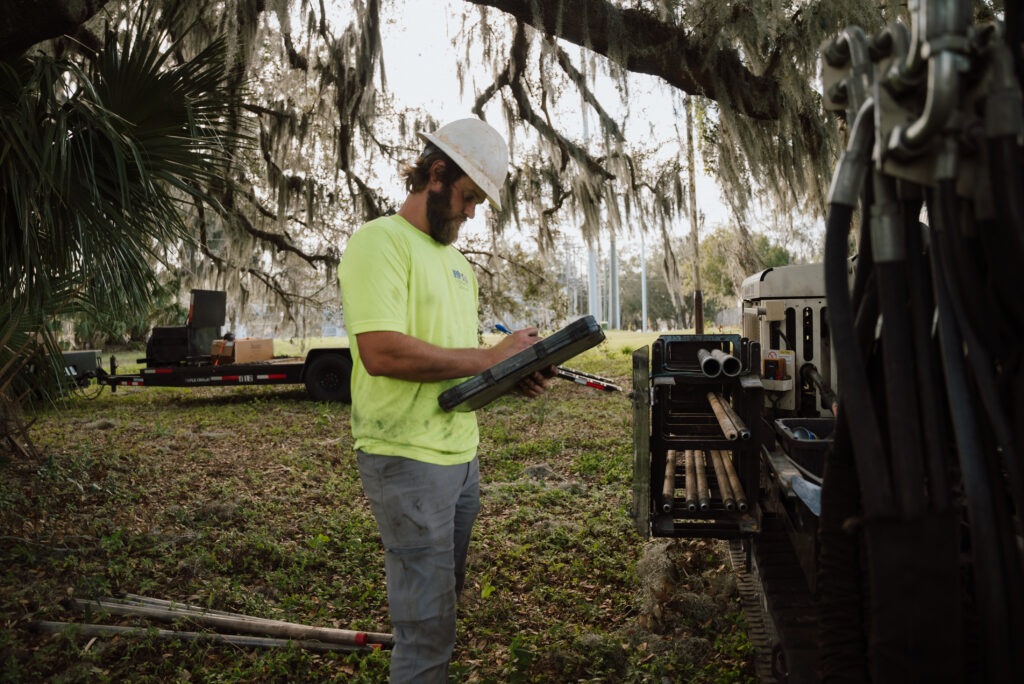
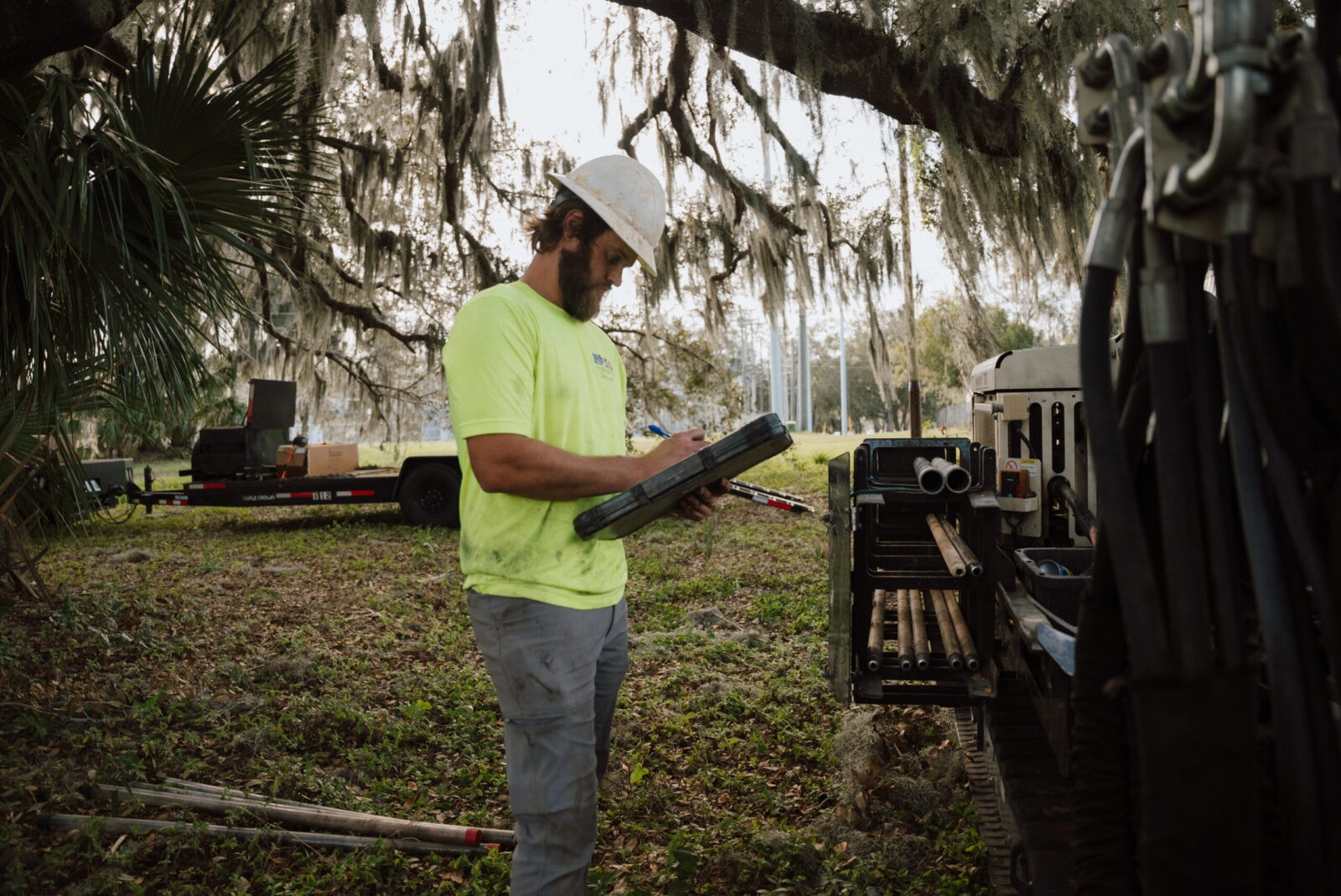
Geo-Tech has drilled and tested Central Florida ground since 1999. Our seven track-mounted direct-push drill rigs reach roadway alignments that truck rigs cannot, and our crews run SPT, CPT, auger borings, and field permeability testing to map the subgrade along the full corridor.
Those samples go to our accredited materials laboratory testing facility, certified by CMEC and FDOT, for LBR, density, moisture, and classification. During construction, our construction materials testing teams verify compaction and materials in the field so the finished road matches the design.
When You Need a Roadway Soil Evaluation
Some projects clearly call for subsurface testing, and others need it more than the schedule suggests. If any of the following describe your work, the ground should be tested before paving begins.
- New public road or corridor widening
- Subdivision or commercial site access roads
- Parking lots and heavy-truck driveways
- Roadway over former agricultural or wetland ground
- Reconstruction of a road that failed early
- Sandy or unpredictable drainage conditions
- Suspected muck or organic soils
- High groundwater near the surface
- Karst or sinkhole-prone terrain
- Any project held to FDOT acceptance standards