Skip to content

Construction materials testing is the quality-assurance work that confirms the materials going into your Florida build actually perform the way the plans assume. It happens during construction, not after, so problems surface while they are still cheap to fix.
On a Central Florida site, the ground is rarely as predictable as it looks, and the concrete, asphalt, and compacted fill you rely on need to be checked against the specifications. That verification is what keeps a project on schedule, on budget, and in step with the building code. Think of construction materials testing as the running proof that what got built matches what was designed.
Construction materials testing is the difference between assuming your concrete, soil, and asphalt meet spec and proving it before the next phase gets built on top.
What Construction Materials Testing Verifies on a Florida Build
Construction materials testing (often shortened to CMT) is a set of field and laboratory checks performed while a structure or roadway goes up. The goal is quality assurance: each material is sampled, tested, and compared to the project specifications and the code.
The work covers the parts of a build that carry load or wear over time. That means concrete, asphalt, soil, and the finished surfaces people walk and drive on. If a result falls short, you learn early, before the next phase is placed on top of a weak layer.
Concrete, Asphalt, and Soil: The Core Checks
Concrete is verified by casting cylinders on site and breaking them in the lab at set intervals to confirm compressive strength. Fresh concrete is also checked for slump, air content, and temperature so the mix arrives workable and cures as designed.
Asphalt is sampled and tested for density, thickness, and mix properties so a parking lot or roadway holds up under traffic and Florida heat. Soil work focuses on compaction and density testing, confirming that fill and subgrade are placed tight enough to support what sits above them. On sandy and organic Central Florida soils, that density check is not a formality.
These three material families make up the bulk of construction materials testing on most jobs. Because each is verified while the work is in progress, a soft fill lift or a weak concrete pour gets flagged and corrected before it disappears under the next layer.
Threshold Inspections and Floor Flatness
Some structures in Florida are classified as threshold buildings, which require a dedicated inspector to observe critical structural work as it happens. This is a code-driven layer of oversight that runs alongside the material sampling and gives the building department a documented record.
Floor flatness is another finished-surface check, measuring how level and even a slab is before flooring, racking, or equipment goes down. A slab that reads within tolerance saves you from callbacks, tilted installations, and disputes after the pour has cured.
01
Sample on site
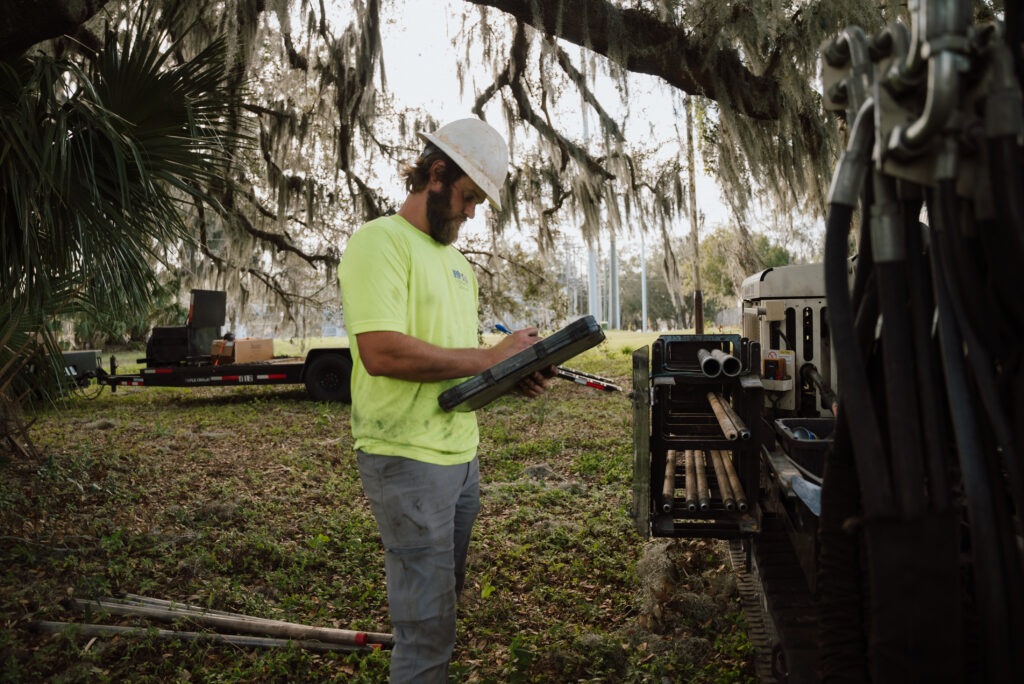
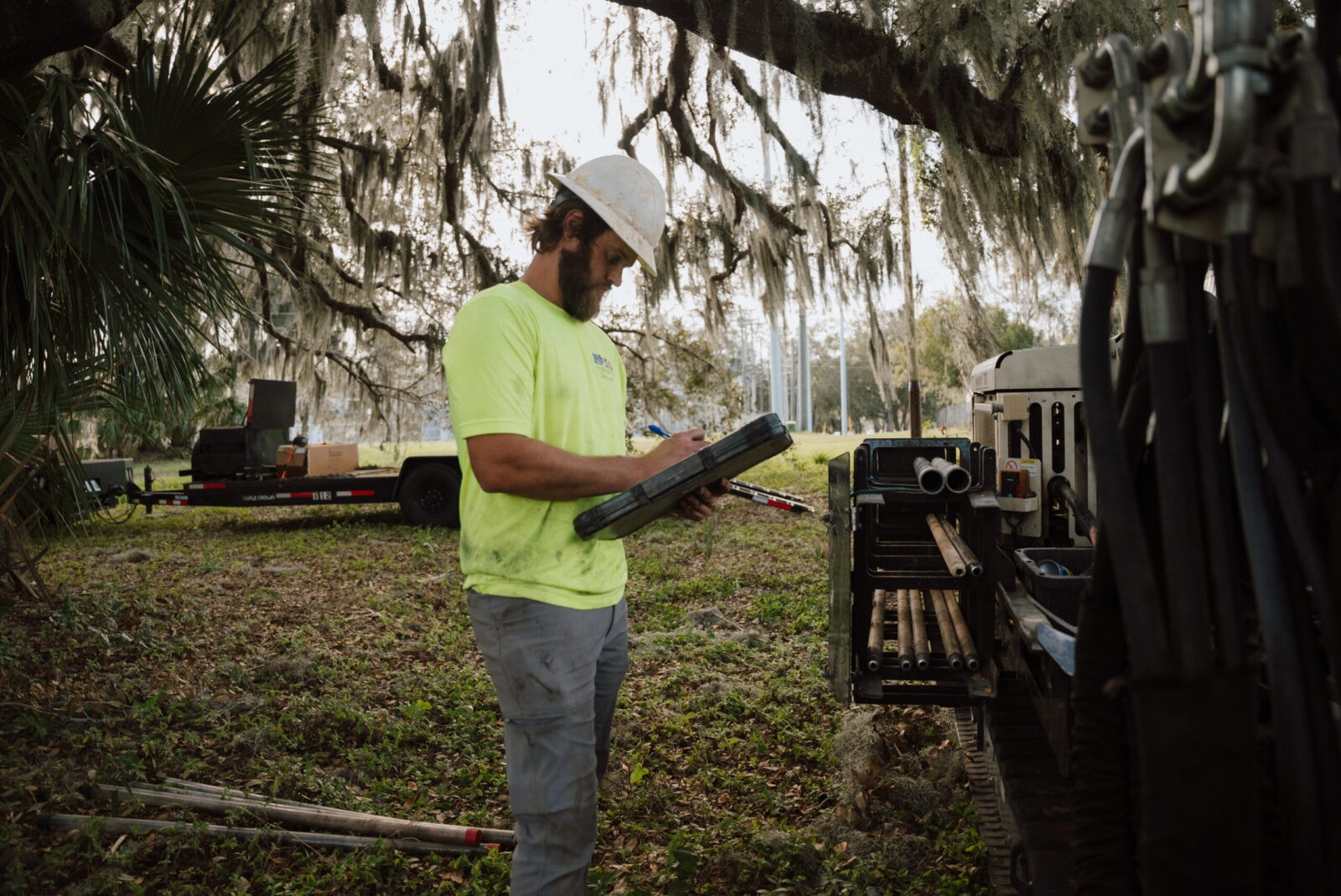
Technicians collect concrete cylinders, asphalt cores, and soil samples as the work is placed, with each sample logged to a location and date.
02
Field test
Density, slump, air content, and thickness are measured in the field so obvious issues are caught before the crew moves on.
03
Lab verify
Cylinders are cured and broken for strength, and asphalt is tested in the lab against the project specifications.
04
Report and document
Results go to the contractor, owner, and building department, creating a paper trail that the phase met code.
Who Relies on Construction Materials Testing
Construction materials testing serves several parties at once. Contractors use it to prove their work met spec and to protect themselves if a question comes up later. Owners rely on it to confirm they received the quality they paid for.
Building departments treat the testing reports as evidence that the project meets the code before they sign off on a phase. Engineers of record lean on them too, since the reports back up the assumptions in the structural design. When those reports come from an accredited lab, everyone at the table can trust the numbers. Our threshold and construction inspection services tie the field observations to the lab results in one record.
How an Accredited Lab Keeps Your Project Code-Compliant
Accreditation is what separates a real result from a guess. Geo-Tech runs a fully accredited materials testing laboratory certified by CMEC and FDOT, so the strength breaks, density figures, and asphalt results carry weight with reviewers and agencies. You can see the scope of our laboratory testing capabilities and how they support field work.
Consistent methods matter as much as the credentials. Standardized procedures published by ASTM International govern how samples are taken and tested, which is why an accredited lab produces results that hold up across projects. Well-run construction materials testing gives your Florida build a defensible record that it was constructed to plan and to code.
Different projects trigger different scopes of work. The lists below show common building types that need testing and the specific checks that tend to come with them.
- Commercial buildings and warehouses
- Roadways, parking lots, and paving
- Residential subdivisions and pads
- Threshold and high-rise structures
- Public and municipal projects
- Concrete cylinder strength breaks
- Soil compaction and density testing
- Asphalt density and thickness
- Floor flatness and levelness
- Threshold structural inspection
Booking construction materials testing early lets you fold sampling into the schedule instead of pausing the crew for it. That planning is what turns testing from a hurdle into a routine part of a clean, code-compliant build.