Skip to content

A geotechnical investigation is how you learn what the ground under your Florida project will actually do before you commit a single dollar to concrete. It is the process of drilling, testing, and analysis that turns an unknown parcel into a set of clear, buildable answers. Done right, it protects your budget, your schedule, and the people who will one day use the structure.
In Central Florida, that matters more than most places. Karst limestone, high groundwater, sandy fill, and buried organic soils can all hide beneath a parcel that looks perfectly level at the surface. This guide walks you through every phase, from the first phone call to the final stamped report, so you know what happens, what you receive, and how long it takes.
A geotechnical investigation replaces guesswork about the ground with measured data you can design and build on with confidence.
What a Geotechnical Investigation Actually Is
At its core, a geotechnical investigation answers three questions. What is the soil and rock beneath your site, how will it behave under the loads you plan to place on it, and what should your foundation and site work do about it. Everything else in the process exists to answer those three questions accurately.
The work blends field exploration, laboratory science, and engineering judgment. A good firm ties those pieces together so the recommendations reflect real conditions, not assumptions. That is the difference between a report that sits in a drawer and one that guides your entire build.
Phase One: Scoping and Desktop Review
Every project starts with a conversation. You share the structure you plan to build, the loads it will carry, and the parcel address. From there we scope the investigation: how many borings, how deep, which tests, and where the crews access the site.
Before anyone reaches the field, a desktop review pulls existing data. We look at published soil surveys, historical aerials, prior reports nearby, and known karst features in Marion, Lake, Sumter, and the surrounding counties. That review tells us where to focus the field work so your dollars go toward real answers.
Phase Two: Field Exploration With Borings and GPR
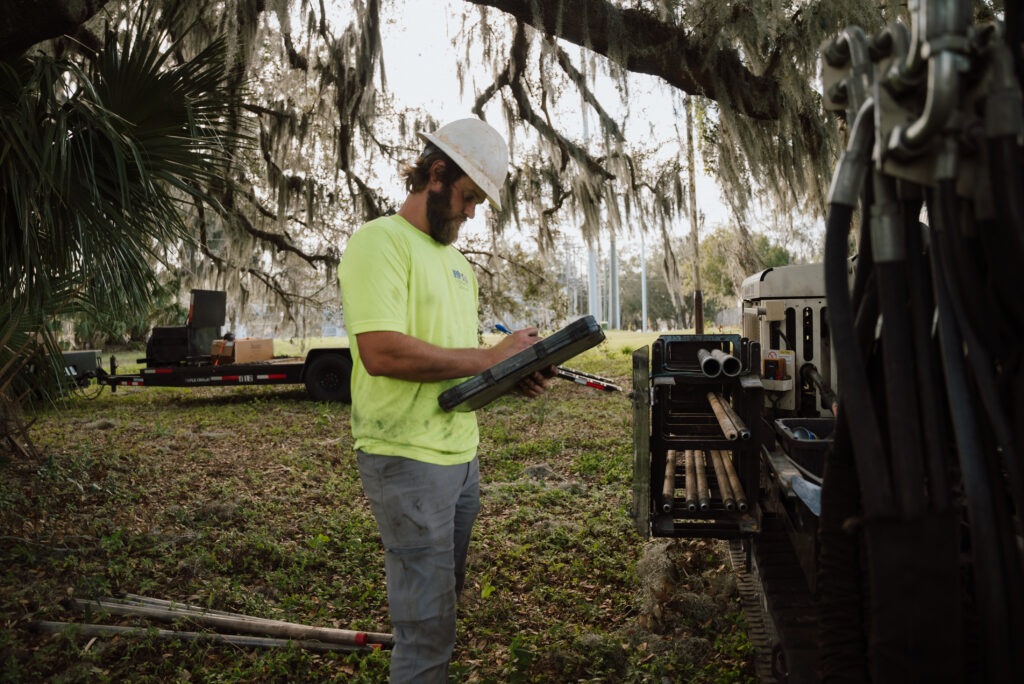
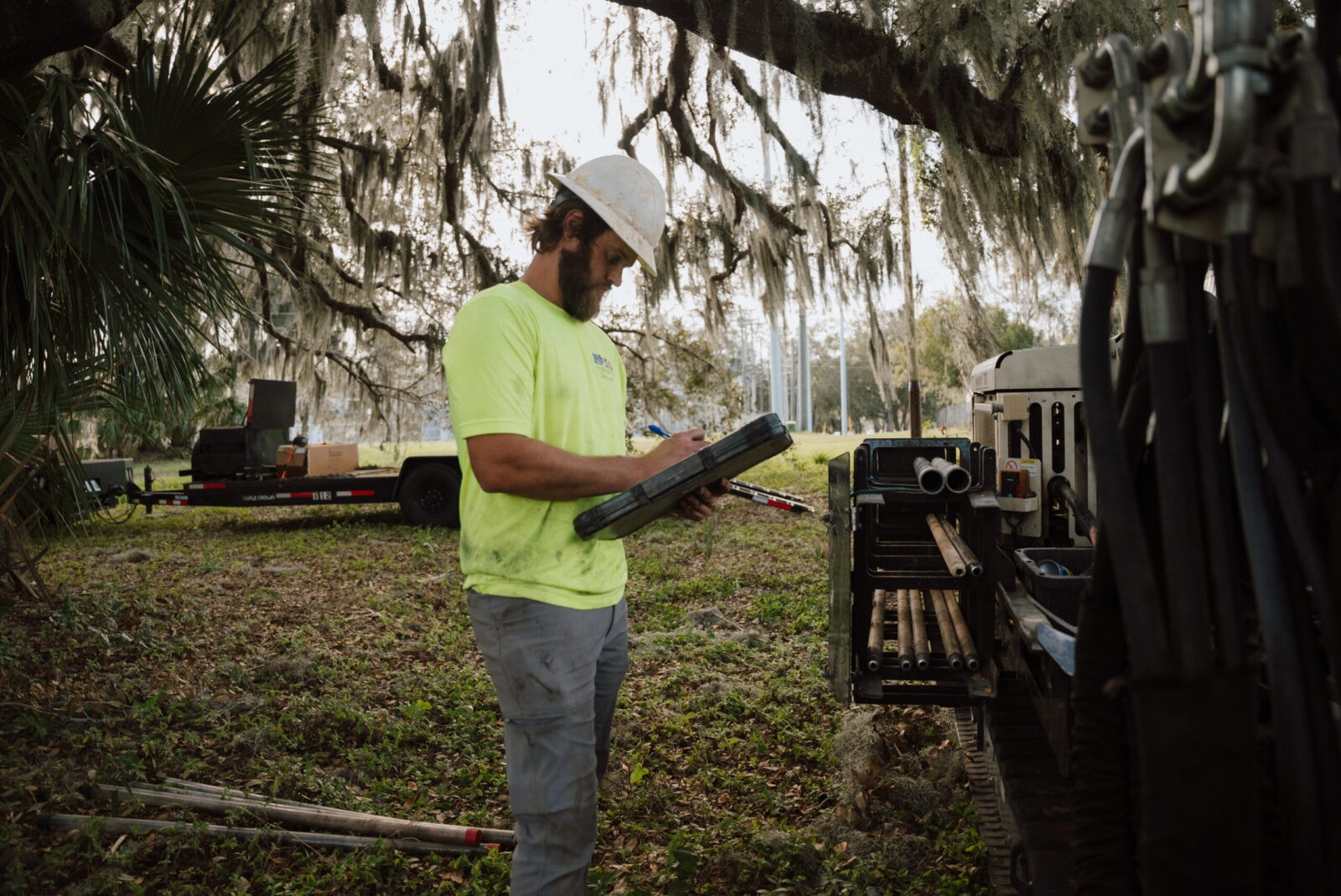
This is the phase most people picture. Our seven track-mounted direct-push rigs advance soil borings across your site using standard penetration testing, cone penetration testing, auger borings, and field permeability testing. Each boring is a vertical window into the ground, logged foot by foot.
Borings tell you a great deal at single points, but the space between them still matters. That is why a strong geophysical exploration program pairs the drilling with ground penetrating radar. With three GPR units and more than twenty years of radar experience in Central Florida, we map soft zones and possible voids across the whole footprint, not just at the boring locations.
Phase Three: Laboratory Testing and Engineering Analysis
Field samples travel to our accredited materials testing laboratory, certified by CMEC and FDOT. There, technicians measure the properties that field work alone cannot confirm: gradation, moisture content, plasticity, density, and strength. These numbers give the engineering the hard values it needs.
Then the analysis begins. Our engineers combine the borings, the radar, and the lab data into a single model of the subsurface. They calculate bearing capacity, settlement, groundwater behavior, and any risk from raveling soils or dissolving limestone. This is where a geotechnical investigation stops being data and becomes decisions.
Phase Four: Recommendations and the Report You Receive
The deliverable is a signed, sealed report. It describes the soils you have, the conditions that drive your design, and specific recommendations for foundations, site preparation, and groundwater control. It also flags anything that needs special attention before construction.
You do not need an engineering degree to read it. Start with the summary and recommendations, then use the boring logs and lab results as backup. Our geotechnical engineering team walks you and your design professionals through it, because a report only helps if the whole project team understands it.
How the Full Geotechnical Investigation Comes Together
Each service answers a different part of the same question, and the value comes from combining them. Drilling gives you depth. Radar gives you coverage. The lab gives you measured properties. Engineering ties them into recommendations you can build on.
The process follows a clear order, and knowing it helps you plan your schedule with confidence.
01
Scope and Review
We define the field program and review existing site and geologic data.
02
Field Exploration
Crews drill the borings and run ground penetrating radar across the site.
03
Lab and Analysis
The laboratory tests the samples and engineers model the subsurface.
04
Report and Build
You receive stamped recommendations, then optional construction-phase testing verifies the work.
When Your Project Needs a Geotechnical Investigation
A geotechnical investigation is not only for large commercial towers. Many Florida projects trigger one, whether by code, by lender, or by simple risk management. If any of the following apply, plan for subsurface work early.
- New commercial or industrial buildings
- Residential subdivisions and pads
- Roadways, parking, and pavements
- Retention ponds and drainage systems
- Sites with known karst or sinkhole history
- Additions or vertical expansions
- Parcels with fill of unknown origin
- Areas of high or seasonal groundwater
- Public and agency-funded work
- Any purchase where ground risk is a concern
Timeline and Construction-Phase Testing
Most investigations for a typical Florida site move from field work to final report within a few weeks, depending on access, boring count, and lab volume. Larger or karst-prone parcels take longer because they deserve more coverage. Booking early keeps the investigation off your project’s critical path. For public work, timelines often follow the standards published by the Florida Department of Transportation.
The process does not end when you break ground. During construction, threshold and materials testing confirm that fills, foundations, and concrete match what the report assumed. That final check closes the loop, so the ground you investigated is the ground you actually build on.